Intro
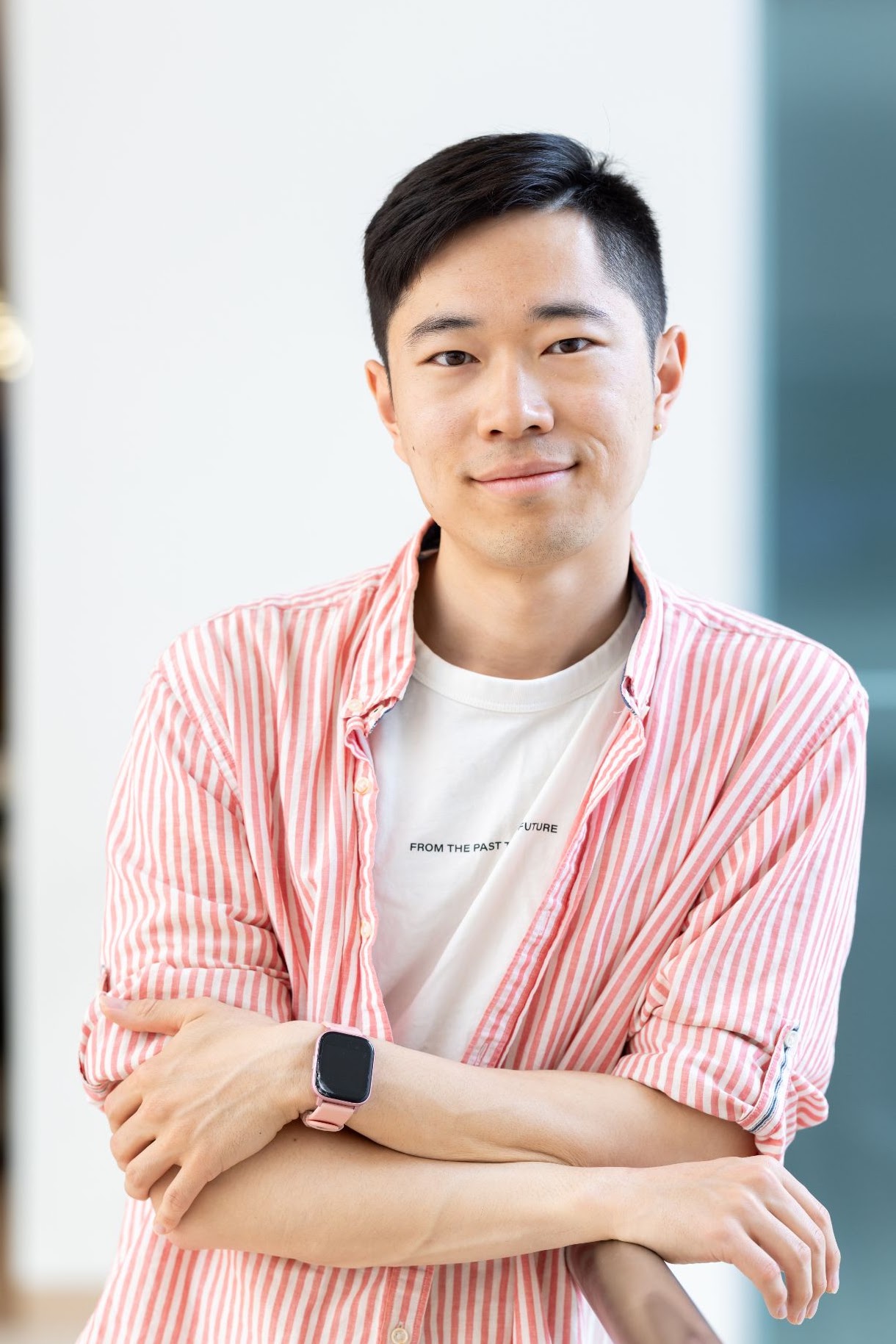
I’m a storyteller at heart: entrepreneur, scientist, and author.
🚀Entrepreneur
I'm building Wondi.ai, an API that detects suicidal ideation and self-harm risk in AI companion conversations, backed by MIT Sandbox, MIT R2E, and Google for Startups, which is up to $70K in non-dilutive funding. I also founded the STEM Vision Scholarship, Korea’s first college-run program that provides annual financial aid and mentorship to underrepresented high school students.
🔬Scientist
My entrepreneurship is rooted in five years of research with Professor John Gabrieli, pursuing a Ph.D. in Brain and Cognitive Sciences at MIT. Two questions run through it.
How can we build a personalized treatment? Learning who a given intervention will actually help, so care is matched to the person instead of found by trial and error.
And how severe is the risk? Measuring distress on a graded clinical scale rather than a binary flag, because the response owed to passive distress is not the response owed to active planning.
Working on both, in clinical trials and on population-scale cohorts, convinced me the science was ready to leave the lab. See the research.
✍️Author
I have written Korean blogs (1M+ views) for 6 years and published 5 books. I also make Korean-language videos on YouTube.
All this journey was sparked by my journey through depression and fueled by the conviction that AI can transform mental health care, making it not only accessible but also deeply personalized.
Education
-
Ph.D. in Brain and Cognitive SciencesMassachusetts Institute of TechnologySep 2024 – present
-
M.S. in Brain and Cognitive SciencesMassachusetts Institute of Technology
-
M.S. in BioengineeringSeoul National University
-
B.S. in Materials Science and Engineering (Minor: Brain-Mind-Behavior)Seoul National University
Publications
-
Krishnan, S.(*), Ahn, G.(*)(†), and Kim, J. (2026). Beyond the Flag: Clinical Framing Closes the Moderation Gap in Suicide Risk Measurement. Proceedings of the 5th Workshop on NLP for Positive Impact (NLP4PI), EMNLP 2026.
-
Ahn, G., Li, C., Liang, A., Choi, W., Ahn, S., Roberts, C., and Gabrieli, J. D. E. (2026). Large Language Model Few-Shot Learning for Predicting Individual Treatment Response to Smartphone-Based Mindfulness in Autistic Adults With Anxiety: Secondary Analysis of a Randomized Controlled Trial. Journal of Medical Internet Research Artificial Intelligence.
-
Lazaridis, I., Ahn, G., Hirokane, K., Choi, W., and Graybiel, A. M. (2024). Striatal Astrocytes Influence Dopamine Dynamics and Behavioral State Transitions. Nature Communications (under review).
-
Lazaridis, I., Crittenden, J. R., Ahn, G., Hirokane, K., Yoshida, T., Mahar, A., … and Graybiel, A. M. (2024). Striosomes control dopamine via dual pathways paralleling canonical basal ganglia circuits. Current Biology.
-
Ahn, G.(*), Kim, B.(*), Kim, K. K., Kim, H., Lee, E., Ahn, W. Y., Kim, J. W., and Cha, J. (2021). Identifying Prepubertal Children with Risk for Suicide Using Deep Neural Network Trained on Multimodal Brain Imaging. In Shaban-Nejad, A., Michalowski, M., Bianco, S. (eds.) AI for Disease Surveillance and Pandemic Intelligence. W3PHAI 2021. Studies in Computational Intelligence, vol. 1013. Springer, Cham.
-
Ahn, G.(*), Choi, B. S.(*), Ko, S., Jo, C., Han, H. S., Lee, M. C., and Ro, D. H. (2022). High-Resolution Knee Plain Radiography Image Synthesis Using Style Generative Adversarial Network Adaptive Discriminator Augmentation. Journal of Orthopaedic Research®.
-
Kim, B. G.(*), Ahn, G.(*), Kim, S.(*), Kim, K., Kim, H., Ahn, W. Y., Kim, J. W., and Cha, J. (2021). Identifying Prepubertal Children with Risk for Suicide Using Deep Neural Network Trained on Multimodal Brain Imaging-Derived Phenotypes. medRxiv.
-
Kim, K., Joo, Y. Y., Ahn, G., Wang, H. H., Moon, S. Y., Kim, H., Ahn, W. Y., and Cha, J. (2022). The sexual brain, genes, and cognition: A machine-predicted brain sex score explains individual differences in cognitive intelligence and genetic influence in young children. Human Brain Mapping.
-
Kim, J., Yang, H., Kim, S. H., Kim, S., Lee, J., Ryu, J., Kim, K., Kim, Z., Ahn, G., Kwon, D., and Yoon, H. (2024). Deep learning-based long-term risk evaluation of incident type 2 diabetes using electrocardiogram in a non-diabetic population: a retrospective, multicentre study. eClinicalMedicine.
(*) denotes equal contribution; (†) denotes corresponding author. See also Google Scholar.
Honors and Awards
-
Henry E. Singleton (1940) Fellowship, MITAwarded in consecutive years for graduate research in brain and cognitive sciences.Sep 2024 – May 2026
-
Biomedical Global Talent Nurturing ProgramFor biomedical engineers who will lead national society. Korea Health Industry Development Institute.Jan 2023 – Dec 2023
-
Certificate of Appreciation, Yoo Suk Hong, Dean, College of Engineering, SNUAppreciation for the contribution of youth scholarship to the education and research foundation.Sep 2022
-
Certificate of Appreciation, Kookheon Cha, Dean, College of Engineering, SNUAcknowledgement of genuine and creative efforts at the forefront of AI education in Korea.Jul 2021
Skills
-
LanguagesKorean (native) · English (TOEFL Home Edition 104; L:29 R:28 W:24 S:23) · Finnish (intermediate)
-
Writing5+ years of Korean blogging with 1,500+ subscribers and 1M+ views, on Brunch